 Experts' Choice Award
 Parco Archeologico di Cuma
What the experts agree on
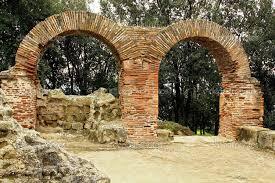
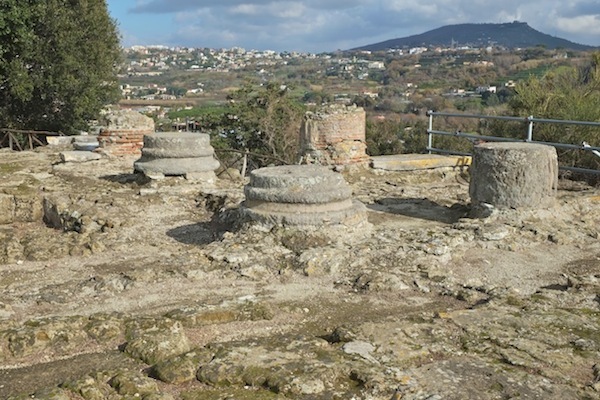
Italy's oldest Greek colony (8th century BC) sprawls across volcanic hills with mythic appeal—explore Sibyl's cave, temples, mosaics, and theatrical ruins while enjoying sweeping bay views. Allow two hours.
“The Parco Archeologico is arranged in terraces overlooking the bay. At the top, the view from the Villa dell'Ambulatio gives a good idea of the layout. ”
– Time Out
 Lonely Planet
 "Dating back to the 8th-century BC, Cuma was the first Greek settlement on the Italian mainland."
 Michelin Guide
 1 Star
"Situated on a hill of volcanic rock and volcanic tufa and fronted by an avenue of bay trees, this acropolis accommodates Sibyl's cave, where the most renowned prophetess of the ancient world spoke as an oracle, the relics of various temples (those of Apollo and Jupiter la became Christian temples); and from the belvedere there is a marvellous sea-view,
daily except Mon 9am-1hr before dusk" Full review
Lonely Planet Top Choice
"Among the surviving snippets are exquisite floor mosaics, a beautifully stuccoed balneum (bathroom), an outdoor theatre and the impressive Tempio di Mercurio" Full review
i
Note that if you have already purchased the cumulative ticket in Pozzuoli, you will avoid the hassle of trudging uphill to the Museo Archeologico dei Campi Flegrei for the sake of getting into the Parco Archeologico di Baia.
Lonely Planet "Dating back to the 8th century BC, Cuma was the first Greek settlement on the Italian mainland. Its ruins are shrouded in ancient mythology" Full review
 Fodor's
 "Allow at least two hours to soak up the ambience of the ruins of Cumae, founded by Greek colonists late in the 8th century BC." Full review

